 Fox Curriculum
Ten years in the classroom taught me where curriculum actually breaks.
B.A. in History, an M.Ed. in adult learning design, a decade teaching AP History, and a doctoral research practice built around one question: does what gets designed to teach something actually teach it?
Fox Curriculum is the practice; Taylor Fox is the person running it. A decade of teaching, a doctorate in progress, and a habit of checking whether the thing that was designed actually taught what it claimed.
I left the classroom, not because I am finished with education. Ten years of teaching showed me how often well-designed curriculum still falls short of what students actually need, and how much gets lost in the space between the people who design instruction and the people who deliver it. I have lived on the delivery side of that gap. The last several years have been about building the research training to work on it from the design side too.
That path started with a B.A. in History at Anderson University, where primary source analysis and disciplinary argumentation first showed me how differently people engage with evidence when instruction does not explicitly teach them how. It continued through an M.Ed. in Curriculum and Instruction at Concordia University Portland, where my thesis on sheltered instruction for English Language Learners became the first real test of a question I am still asking: what does it take to design learning for people the system was not originally built to serve?
In between, I worked both ends of the age range: advising adult graduate students at Ashford University, and managing FERPA-governed academic records at Haverford College. My return to the classroom started as a traveling substitute across San Diego, teaching grades 6 through 12 in every kind of school, from the most affluent campuses to the most under-resourced. That range taught me something I still carry: every student walks in with something different, and the job is to hold the same high standard while building a different path to it for each room.
From there I taught AP US History and AP European History at Gompers Preparatory Academy. Then came The Rock Academy, where I served as AP History Lead and Director of 7-12 Performing Arts, a department-head role that included directing and producing several full-length musicals, and where I earned my Clear California credential through the state's two-year Induction program.
My doctoral work sits at the intersection of curriculum theory, learning theory, and educational leadership, with formal training in both quantitative and qualitative research methods. I am currently in the dissertation phase, researching why AP World History exam outcomes at the school where I taught vary across years despite consistent instruction, resources, and instructor. It is the same question that has followed me since undergrad, now with the research training to actually answer it.
I want to be in that room while the foundations are still wet, bringing a decade of classroom judgment to decisions that will define how the next generation learns.
How it fits together
Launch of The FoxStead
The house that holds three businesses, each named for what it produces. Fox Curriculum: curriculum development and AI integration, educational research and consulting. Fox Imprint: brand and marketing, built from the ground up for small businesses. Fox Findings: original goods, designed and produced by hand. Founded, owned, and run by Taylor Fox.
Ed.D. Dissertation Phase
Curriculum and Instruction. Researching inconsistent AP World History exam pass rates using a mixed-methods design. Actively seeking the next chapter: curriculum development, instructional design, or education research.
California Induction Program
Two years of formal, mentor-verified classroom action research. Cleared California Single Subject Teaching Credential, valid through July 2031.
AP History Lead & Director of 7-12 Performing Arts, The Rock Academy
AP World History and AP US History, department leadership, and directing and producing full-length musicals, including The Wizard of Oz (2025–26) alongside a full AP teaching load.
M.A. in Education-Teaching, Alliant International University
Bundled with a California Preliminary Single Subject Teaching Credential.
M.Ed. in Curriculum & Instruction, Concordia University Portland
Thesis: Sheltered Instruction: Equipping Teachers for Language and Core Education, published April 2016.
B.A. in History, Anderson University
Emphasis in military history, with an unusually deep music performance background alongside it. Senior Thesis: Civilian Perceptions of Military Life.
The performing arts thread
I have directed and produced nine full-length musical productions at every level from elementary school to high school, most recently The Wizard of Oz. By the third performance of that final run, I could stand in the booth with my headset on and say nothing, because the students ran the entire show themselves, on stage and behind it. That is the outcome I designed toward in the classroom too: students who no longer needed me in order to perform.
Explore my performing arts work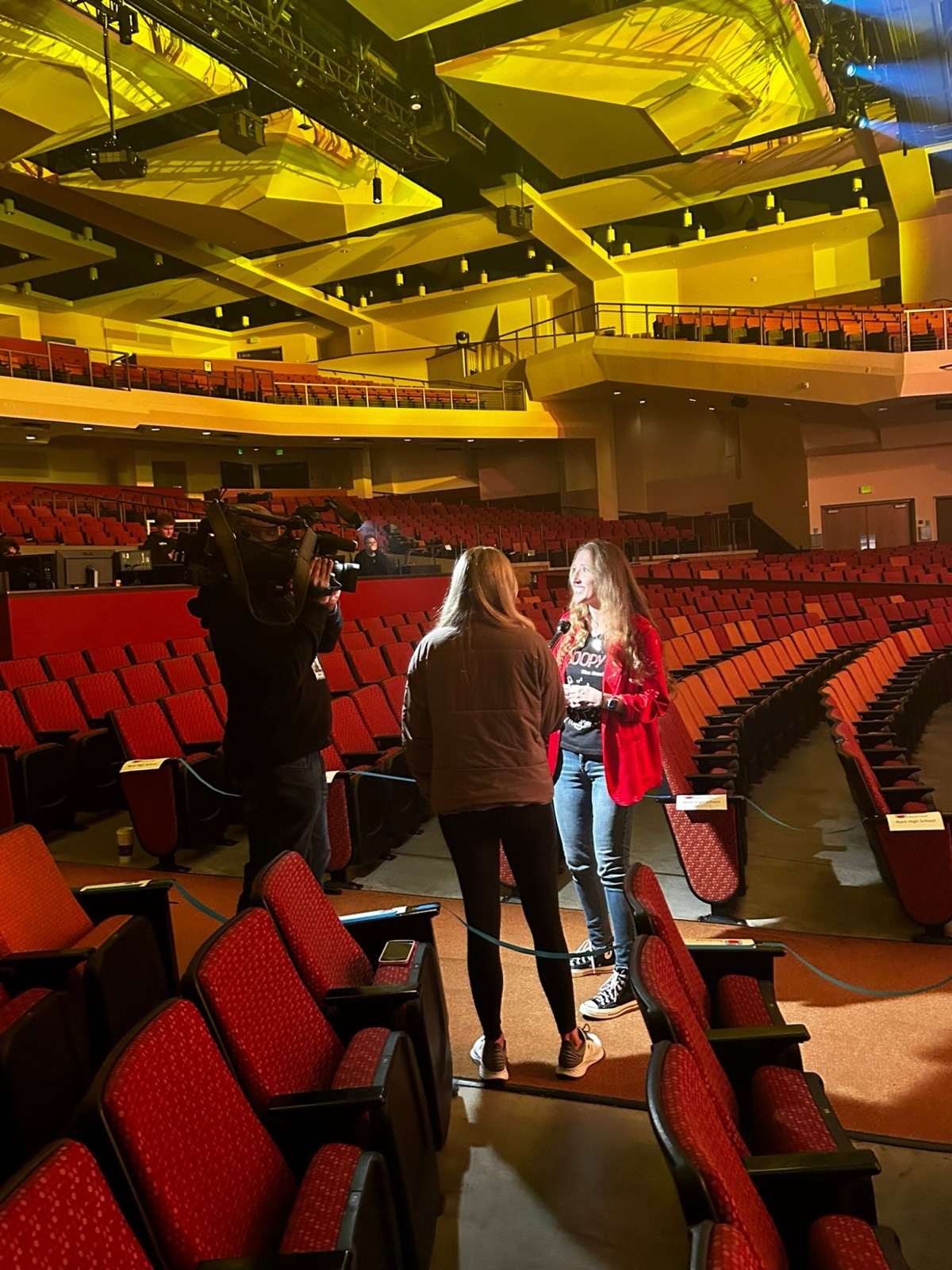
Want the full record?
Degrees, credentials, publications, and the complete work history.
CV and credentials →